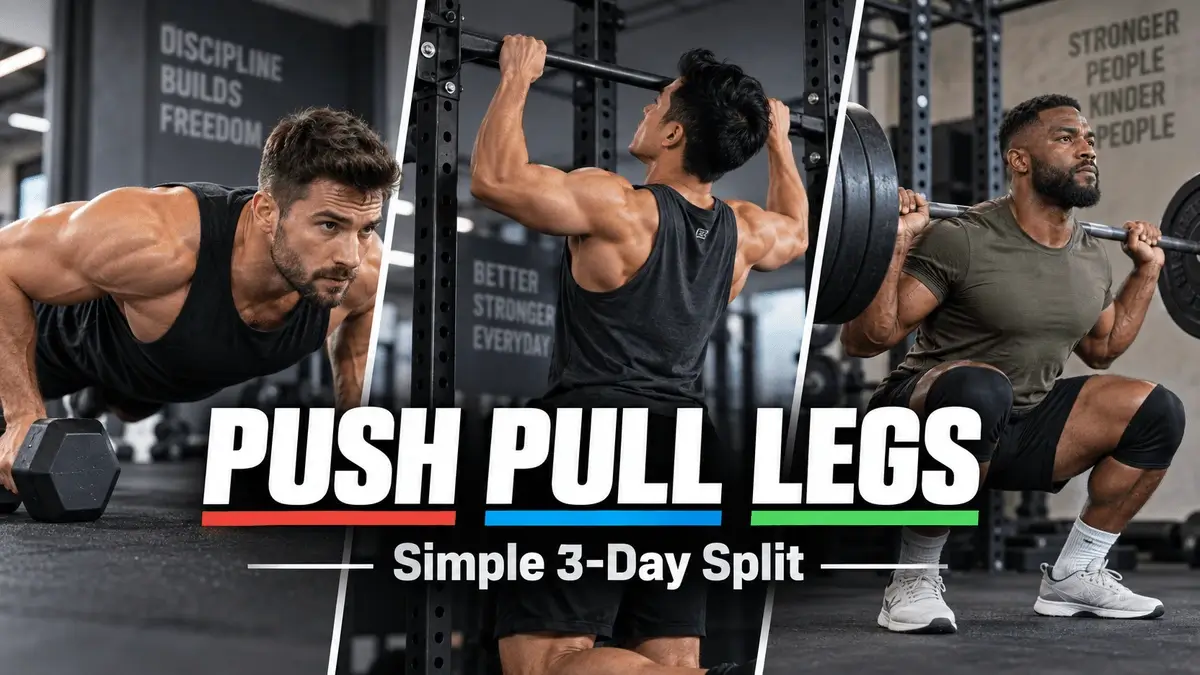
PPL Push Pull Legs: The Ultimate Workout Split for Muscle Growth and Strength

In the world of fitness, finding an effective and sustainable workout routine can be challenging. One of the most efficient and popular workout splits is the Push Pull Legs (PPL) routine. This split is renowned for its simplicity and effectiveness in building muscle and strength. Whether you are a beginner or an advanced lifter, the PPL split can be tailored to suit your needs and help you achieve your fitness goals.

Key Takeaways

  • Structure: The PPL split divides workouts into three categories: Push (chest, shoulders, triceps), Pull (back, biceps), and Legs (quads, hamstrings, glutes, calves).
  • Benefits: It maximizes workout efficiency, promotes balanced muscle growth, offers flexibility, and is highly adaptable to individual goals and schedules.

Understanding (PPL) Push Pull Legs Workouts

Push Day

Bench press

Push day focuses on exercises that target the chest, shoulders, and triceps. These muscle groups are involved in pushing movements, hence the name “Push Day.”

Primary Muscles Targeted:

Chest: The chest, particularly the pectoral muscles, is the primary focus during push day exercises. These muscles are crucial for pushing movements, helping with activities like pushing a door or lifting objects.

Shoulders: The shoulder muscles, or deltoids, are another key group worked on push day. Strengthening these muscles not only improves shoulder stability and mobility but also enhances overall upper body strength.

Triceps: The triceps, located at the back of the upper arm, are involved in virtually all pushing movements. Strong triceps contribute significantly to the overall pushing power and help in performing various daily activities and sports.

Key Push Exercises:

Chest Exercises:

  • Bench Press: This is a staple exercise for developing the chest muscles. It also engages the shoulders and triceps to some extent.
  • Incline Press: Targeting the upper part of the chest, the incline press helps in creating a balanced chest development.
  • Chest Flyes: This exercise isolates the pectoral muscles and provides a different range of motion compared to presses.

Shoulder Workouts:

  • Overhead Press: A fundamental shoulder exercise that also engages the triceps and upper chest.
  • Dumbbell Shoulder Press: This variant allows for a greater range of motion and can help correct imbalances between sides.
  • Lateral Raises: These focus on the lateral deltoids, helping to build broader shoulders.

Triceps Training:

  • Tricep Dips: An excellent bodyweight exercise that targets the triceps effectively.
  • Skull Crushers: This isolation exercise focuses intensely on the triceps.
  • Tricep Pushdowns: Using a cable machine, this exercise provides constant tension on the triceps throughout the movement.

Pull Day

deadlifts

Pull day targets the back, biceps, and forearms. These muscle groups are involved in pulling movements, making them essential for a balanced upper body.

Primary Muscles Targeted:

Back: The back muscles, including the latissimus dorsi, trapezius, and rhomboids, are the main focus. Strengthening these muscles improves posture, stability, and overall upper body strength.

Biceps: Located at the front of the upper arm, the biceps are crucial for pulling motions. Strong biceps contribute to arm strength and aesthetics.

Forearms: Engaging the forearms during pull exercises helps in improving grip strength, which is essential for lifting and everyday activities.

Key Pull Exercises:

Back Exercises:

  • Deadlifts: This compound movement targets the entire back and posterior chain, including the glutes and hamstrings.
  • Bent-Over Rows: Focuses on the middle back and lats, enhancing back thickness and strength.
  • Lat Pulldowns: Primarily targets the latissimus dorsi, helping to build a wide back.

Biceps Workouts:

  • Bicep Curls: A fundamental exercise for building bicep strength and size.
  • Hammer Curls: Targets both the biceps and the brachialis, adding thickness to the upper arm.
  • Chin-Ups: A bodyweight exercise that engages the biceps and upper back muscles.

Forearm Training:

  • Wrist Curls: Focuses on the forearm flexors, improving grip strength.
  • Reverse Curls: Targets the forearm extensors and adds balance to arm development.

Leg Day

squat

Leg day focuses on the lower body, targeting the quadriceps, hamstrings, glutes, and calves. Strong legs are essential for overall strength, balance, and mobility.

Primary Muscles Targeted:

Quadriceps (Quads): These muscles are located at the front of the thigh and are key for knee extension and various leg movements.

Hamstrings: Located at the back of the thigh, the hamstrings are responsible for knee flexion and hip extension.

Glutes: The gluteal muscles are crucial for hip extension, abduction, and rotation. Strong glutes contribute to better posture and lower body strength.

Calves: These muscles, located at the back of the lower leg, help with ankle movements and provide stability for walking and running.

Key Leg Exercises:

Quad Exercises:

  • Squats: The king of leg exercises, squats target the quads, glutes, and lower back.
  • Leg Press: Allows you to lift heavy weights safely, focusing on the quads.
  • Lunges: Work the quads and glutes while also engaging the core for stability.

Hamstring Workouts:

  • Romanian Deadlifts: Focuses on the hamstrings and glutes, promoting strength and flexibility.
  • Leg Curls: Isolate the hamstrings, enhancing their development.

Glute Exercises:

  • Hip Thrusts: Specifically target the glutes, helping to build strength and size.
  • Glute Bridges: A bodyweight exercise that also targets the glutes effectively.

Calf Training:

  • Calf Raises: Focus on the calf muscles, improving their strength and endurance.

Sample Routines

To get started with a PPL split, here are sample routines for each day:

Push Day:

ExerciseSetsReps
Bench Press48-10
Overhead Press48-10
Incline Dumbbell Press310-12
Lateral Raises312-15
Tricep Dips310-12
Tricep Pushdowns312-15
This combination of chest, shoulder, and triceps exercises ensures a balanced and comprehensive upper body workout. It’s important to use proper form to avoid injuries and maximize the benefits of each exercise. Adjust weights and repetitions according to your fitness level and goals, gradually increasing the intensity as you progress.

Pull Day

ExerciseSetsReps
Deadlifts46-8
Bent-Over Rows48-10
Lat Pulldowns310-12
Bicep Curls312-15
Hammer Curls310-12
Wrist Curls315-15
This routine ensures comprehensive development of the back, biceps, and forearms. As always, proper form and gradually increasing weights are crucial for avoiding injuries and maximizing gains.

Leg Day

ExerciseSetsReps
Squats48-12
Leg Press310-15
Romanian Deadlifts38-10
Lunges312
Leg Curls312-15
Calf Raises415-20
This routine ensures balanced development of all major lower body muscles. Proper form and gradually increasing weights are essential to prevent injuries and achieve optimal results.

Optimal Rest and Recovery

Rest and recovery are crucial components of any workout regimen. For the PPL split, it’s recommended to have at least one rest day after completing the three-day cycle. Here’s a sample weekly schedule:

Weekly ScheduleActivity
MondayPush
TuesdayPull
WednesdayLegs
ThursdayRest
FridayPush
SaturdayPull
SundayLegs
This schedule allows for adequate recovery time for each muscle group, preventing overtraining and promoting muscle growth.

Customizing Your PPL Split

The beauty of the PPL split lies in its adaptability. Here are some tips to customize your PPL split according to your fitness level and goals:

Beginners:

  • Start with lighter weights and focus on mastering the form.
  • Perform 2-3 sets per exercise with higher reps (10-15).

Intermediate Lifters:

  • Increase the weight gradually.
  • Perform 3-4 sets per exercise with moderate reps (8-12).

Advanced Lifters:

  • Incorporate advanced techniques like supersets, drop sets, and progressive overload.
  • Focus on compound movements and include isolation exercises for weak points.

Nutrition Tips

Nutrition plays a vital role in supporting your workout routine and achieving your fitness goals. Here are some tips:

Macronutrients:

  • Ensure a balanced intake of protein, carbohydrates, and healthy fats.
  • Aim for 1-1.2 grams of protein per pound of body weight to support muscle repair and growth.

Pre- and Post-Workout Nutrition:

  • Consume a balanced meal with protein and carbs about 1-2 hours before your workout.
  • Post-workout, have a protein-rich meal or shake within 30 minutes to aid recovery.

Supplements:

  • Whey Protein: Convenient source of high-quality protein.
  • Creatine: Supports strength and muscle growth.
  • BCAAs: Helps in reducing muscle soreness and promoting recovery.

Avoiding Common Mistakes

To get the most out of your PPL workout split, avoid these common mistakes:

  1. Neglecting Warm-Ups: Always start with a proper warm-up to prevent injuries.
  2. Skipping Rest Days: Rest is essential for recovery and muscle growth.
  3. Ignoring Form: Proper form is crucial to avoid injuries and maximize effectiveness.
  4. Overtraining: Listen to your body and take rest days as needed.
  5. Unbalanced Diet: Ensure your diet supports your fitness goals with adequate nutrients.

Final Thoughts

Starting a fitness journey takes commitment and a solid plan. The PPL regimen is a great guide to reach your goals. It explains the Push Pull Legs workout schedule’s benefits, like its efficiency and balance.

This guide shows how to balance push, pull, and leg days. It also talks about rest and recovery. The PPL split fits different fitness levels and goals.

The PPL regimen is flexible for both new and experienced lifters. You can add cardio, adjust your routine, or use advanced techniques. It’s a key tool for your fitness journey.

As you finish this guide, remember fitness is a journey that keeps changing. The PPL regimen helps grow muscles evenly and builds discipline. Keep pushing yourself and stay true to your workout plan. Your hard work will lead to a healthier, stronger future.

FAQ

What is a PPL Push Pull Legs workout split?

A PPL Push Pull Legs workout split is a way to organize your gym time. It focuses on push, pull, and leg workouts. This helps balance muscle growth and aid in recovery.

How often should I perform each workout?

Typically, you perform each type of workout twice a week, resulting in a six-day workout schedule.

Can beginners follow a PPL split?

Yes, beginners can follow a PPL split by starting with lighter weights and focusing on proper form.

How does the PPL split prevent muscle imbalances?

The PPL split ensures balanced muscle growth by targeting different muscle groups on specific days.

What are essential exercises for leg day?

Squats, deadlifts, and leg presses are essential exercises for leg day.

How important is rest and recovery?

Rest and recovery are crucial for muscle repair, preventing overtraining, and promoting growth

Can cardio be incorporated into a PPL split?

Yes, cardio can be added on rest days or after strength training sessions.

What nutritional tips should I follow?

Maintain a balanced diet with adequate protein intake and consider supplements like whey protein and creatine.