The Ultimate Guide to Shadow Boxing: Techniques, Benefits, and Why You Should Start

Shadow boxing might seem like something reserved for the pros, but in reality, it’s a simple yet powerful practice that anyone can benefit from, whether you’re just getting into boxing or you’ve been at it for years. It’s not just about throwing punches in the air; it’s about mastering your movements, honing your technique, and getting your mind in the right place. Think of shadow boxing as your secret weapon—no equipment needed, just you, your focus, and your imagination. Let’s get started!

What Exactly is Shadow Boxing?

Master Shadow Boxing Techniques for Fitness & Confidence 🥊

If you’re not familiar with shadow boxing, it’s essentially a solo training exercise where you mimic a fight without an opponent. You’re throwing punches, moving your feet, and practicing defense—all while visualizing an opponent in front of you. It’s kind of like playing chess against yourself, but in this case, it’s all about refining your moves, getting faster, and anticipating what’s coming at you.

Why Shadow Boxing is a Must in Training

You might wonder, “Why bother with shadow boxing when I could be hitting a heavy bag or sparring with a partner?” Well, shadow boxing is all about precision and control. It lets you focus on every little detail of your technique without the distraction of a physical opponent. Plus, it’s a great way to mentally prepare for real situations in the ring, allowing you to visualize and plan your moves in advance.

The Benefits of Shadow Boxing

Shadow boxing isn’t just a filler in your training routine—it’s a game changer. Here’s why you should make it a regular part of your workouts:

1. Perfecting Your Technique

One of the biggest perks of shadow boxing is the chance to really dial in on your technique. Without any equipment or an opponent to think about, you can concentrate on getting every punch just right—whether it’s a jab, cross, or hook. You’ll have the freedom to focus on your form, adjust your stance, and work on your footwork until everything feels just right.

2. A Killer Cardio Workout

Shadow boxing is no joke when it comes to cardio. You’re constantly moving, throwing punches, and keeping your heart rate up, which means you’re burning serious calories while also boosting your cardiovascular endurance. Over time, you’ll notice you can last longer in intense training sessions—and in the ring.

3. Sharpening Your Mental Game

Boxing isn’t just physical—it’s a mental game, too. Shadow boxing gives you the perfect opportunity to train your mind as well as your body. As you visualize an opponent and work through different scenarios, you’re teaching your brain to stay focused, anticipate moves, and react quickly—all crucial skills in a real fight.

4. Stress Relief

There’s something incredibly therapeutic about shadow boxing. Maybe it’s the repetitive movement, or maybe it’s the chance to throw punches without any real consequence, but it’s a great way to blow off steam. By the end of a session, you’ll feel lighter, both physically and mentally.

5. Boosting Flexibility and Mobility

Boxing is all about movement, and shadow boxing helps keep you limber. The more you practice, the more you’ll notice your body loosening up, improving your range of motion, and becoming more agile. This increased flexibility isn’t just great for boxing—it’s beneficial for your overall fitness and helps in preventing injuries.

6. No Gear Needed

Woman doing shadow boxing with no gear

One of the best things about shadow boxing is that you can do it anywhere, anytime, with zero equipment. Whether you’re stuck at home, traveling, or just want to squeeze in a quick workout, shadow boxing is a versatile option that’s always available.

Getting Started with Shadow Boxing

If you’re new to shadow boxing, it might feel a little awkward at first. But with some guidance, you’ll be throwing punches like a pro in no time.

1. Warm Up First

Don’t skip the warm-up. Shadow boxing is more intense than it looks, and jumping in cold can lead to injury. Start with some light cardio—jump rope, jogging, or dynamic stretches to get your blood flowing and muscles ready.

2. Use a Mirror

shadow boxing in front of a mirror

If you can, practice in front of a mirror. Watching yourself in real-time is a great way to check your form and make sure your movements are crisp and accurate. It’s like having a coach, but cheaper.

3. Visualize Your Opponent

The whole point of shadow boxing is to simulate a fight. So, as you throw punches, imagine an opponent in front of you. Picture their movements, their stance, and think about how you’d counter their attacks. This mental visualization is key to making your shadow boxing sessions effective.

4. Start Slow with Basics

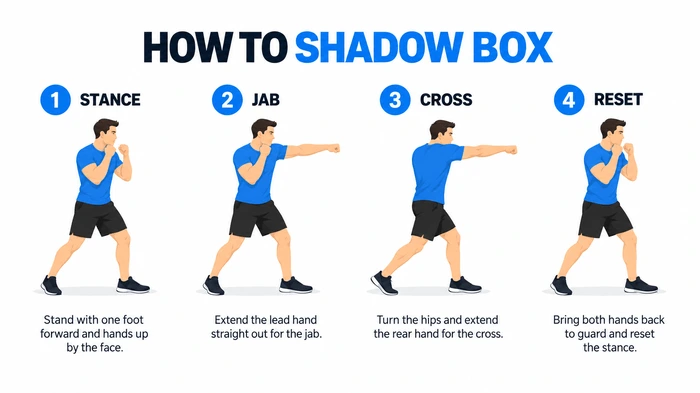
Don’t rush. Start with the basics—jab, cross, hook—and focus on getting each one perfect. Pay attention to your stance, how you rotate your body, and where you place your punches. It’s better to go slow and get it right than to speed through and develop bad habits.

5. Footwork is Key

Boxing isn’t just about your hands—it’s about your feet, too. As you throw punches, keep your feet moving. Practice stepping, pivoting, and shifting your weight. Good footwork will help you stay balanced and position yourself to land effective punches.

6. Build Up the Intensity

As you get more comfortable, start increasing the pace. Add more combinations, pick up the speed, and incorporate defensive moves like slipping and weaving. This gradual progression will build your stamina and prepare you for tougher challenges.

Leveling Up: Advanced Shadow Boxing Techniques

Once you’ve got the basics down, it’s time to step it up with some advanced techniques. These will help you refine your skills and get even more out of your shadow boxing sessions.

1. Work on Defense

Don’t forget defense. As you shadow box, practice slipping punches, ducking, and weaving. These moves will make you harder to hit in a real fight and improve your overall boxing IQ.

2. Combo Drills

Start working on more complex combinations. Mix up your jabs, crosses, hooks, and uppercuts in quick succession. The more you practice, the more fluid and natural these combos will feel, making you a more versatile fighter.

3. Try Shadow Boxing with Weights

Shadow boxing with light weights

For an added challenge, grab some light weights—like 1-2 lb dumbbells—and try shadow boxing with them. This will build strength in your arms and shoulders, making your punches faster and more powerful. Just be sure not to overdo it; start light and work your way up.

4. Focus on Specific Scenarios

Use shadow boxing to work through specific fight scenarios. Imagine you’re up against a taller opponent, or maybe you’re pinned against the ropes. Practice the moves and strategies you’d use in these situations so you’re ready for anything.

5. Mastering Feints and Fakes

Feints are your best friend in the ring. Practice using subtle movements to fake out your opponent, creating openings for your punches. Incorporating feints into your shadow boxing will make your offensive game more unpredictable.

Avoid These Common Mistakes

Even though shadow boxing is simple, there are a few pitfalls to watch out for:

1. Skipping the Technique

It’s easy to get caught up in the movement and start throwing wild punches. But if you’re not focusing on technique, you’re not really improving. Always prioritize form over speed or power.

2. Forgetting Footwork

Don’t let your feet go dead. Footwork is crucial in boxing, and ignoring it during shadow boxing is a big mistake. Keep your feet moving and practice shifting your weight as you throw punches.

3. Overtraining

Shadow boxing can be intense, so don’t push yourself too hard. It’s important to listen to your body and take breaks when needed. Overtraining can lead to burnout or injury, which will only set you back.

4. Not Visualizing an Opponent

Shadow boxing without visualizing an opponent turns the exercise into just a cardio workout. To really benefit, you need to engage your mind and practice as if you’re in a real fight.

5. Ignoring Defense

Remember, boxing is as much about defense as it is about offense. Don’t forget to practice your defensive moves like slipping and ducking during your shadow boxing sessions.

How to Fit Shadow Boxing Into Your Training

Shadow boxing is versatile and can be slotted into your training routine in a number of ways:

1. Warm-Up

Use shadow boxing as a warm-up before hitting the heavy bag or sparring. It’s a great way to get your body and mind in sync before you go all out.

2. Cardio Boost

Make shadow boxing a part of your cardio routine. Do several rounds of high-intensity shadow boxing with short rest intervals to get your heart rate up and improve your endurance.

3. Technique Practice

Dedicate specific sessions to shadow boxing where you focus solely on technique. This could be working on a particular combination or refining your footwork. These sessions are all about quality, not quantity.

4. Cool Down

At the end of your workout, use a light shadow boxing session as a cool down. It’s a nice way to gradually lower your heart rate and stretch out your muscles.

5. Active Rest Days

On your rest days, a light session of shadow boxing can help keep you in the game without putting too much strain on your body. It’s a great way to stay loose and keep your skills sharp.

Final Thoughts

Shadow boxing is more than just punching the air—it’s a fundamental part of boxing training that can elevate your skills, improve your fitness, and sharpen your mind. Whether you’re new to boxing or have been at it for years, incorporating shadow boxing into your routine can help you become a more well-rounded fighter. So next time you’re at the gym or just looking for a quick workout, give shadow boxing a try. You might be surprised at how much it can push your training to the next level.

FAQs

Do I need any special equipment for shadow boxing?

Nope! Shadow boxing requires no special equipment. However, using a mirror can help you check your form.

How often should I practice shadow boxing?

3-4 times a week is a good frequency to aim for, especially if you’re serious about improving your boxing skills.

Can shadow boxing help me get in shape?

Absolutely. Shadow boxing is a great way to burn calories, build endurance, and improve overall fitness.

Is shadow boxing good for beginners?

Yes, shadow boxing is perfect for beginners. It helps you get comfortable with basic boxing movements and improves your technique.

Do I need a coach for shadow boxing?

While a coach can provide valuable feedback, you can definitely practice shadow boxing on your own. Just be mindful of your form.

How long should a shadow boxing session last?

Anywhere from 10 to 30 minutes, depending on your fitness level and goals.