
The bench press is useful, but it is not the only way to train your chest and pressing strength. If you do not own a bench, train in a small space or simply want more options, there are several effective alternatives you can do at home.
Quick Answer
Good bench press alternatives include the dumbbell floor press, push-up, feet-elevated push-up, dumbbell squeeze press, single-arm floor press, resistance-band chest press, dumbbell fly, close-grip push-up, incline push-up and standing band press. The best option depends on your equipment, goal and comfort.
10 Bench Press Alternatives for Home Workouts
| Exercise | Equipment | Best for |
|---|---|---|
| Dumbbell floor press | Dumbbells | Chest and triceps strength |
| Push-up | None | Simple full pressing pattern |
| Feet-elevated push-up | Low platform | Harder bodyweight pressing |
| Dumbbell squeeze press | Dumbbells | Chest tension |
| Single-arm floor press | One dumbbell | Unilateral pressing and core control |
| Resistance-band chest press | Band + anchor | Portable resistance |
| Dumbbell floor fly | Dumbbells | Chest isolation |
| Close-grip push-up | None | Triceps emphasis |
| Incline push-up | Stable elevated surface | Beginner-friendly pressing |
| Standing band press | Band + anchor | Small-space training |
1. Dumbbell Floor Press
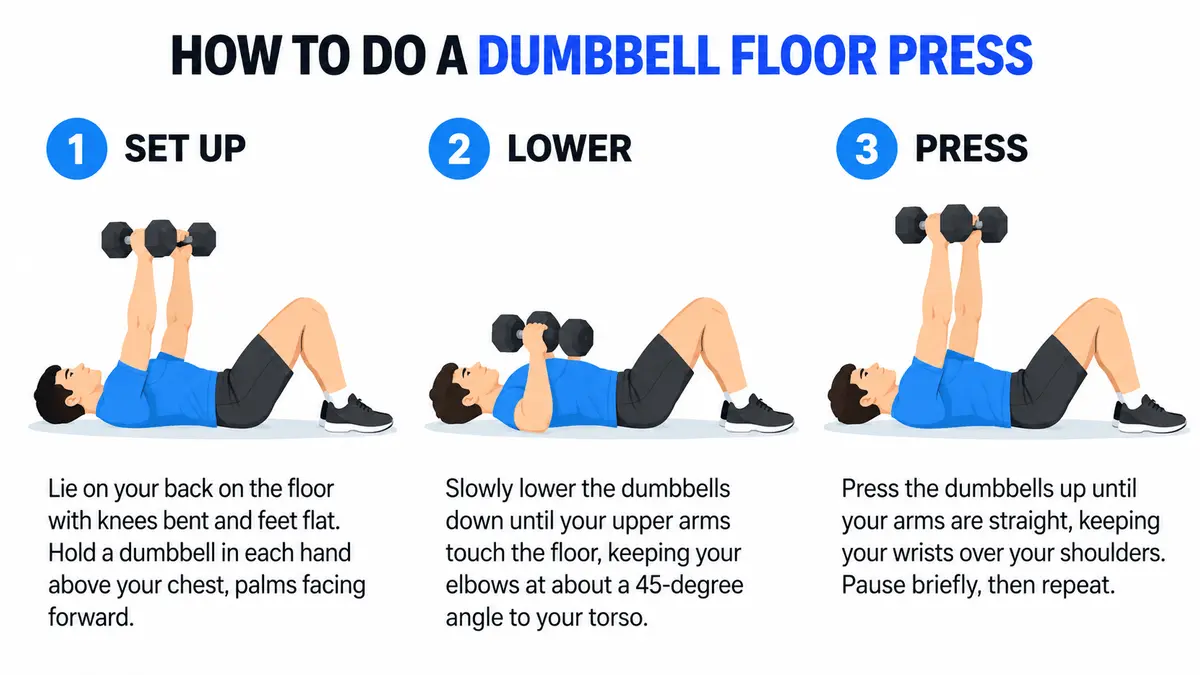
Lie on the floor with a dumbbell in each hand. Keep your upper arms at a comfortable angle from your torso and press the weights upward. Your upper arms stop naturally when they reach the floor, which shortens the bottom range compared with a bench press.
This is one of the most useful bench press alternatives at home because it keeps the basic horizontal pressing pattern and only requires dumbbells and floor space.
2. Push-Up
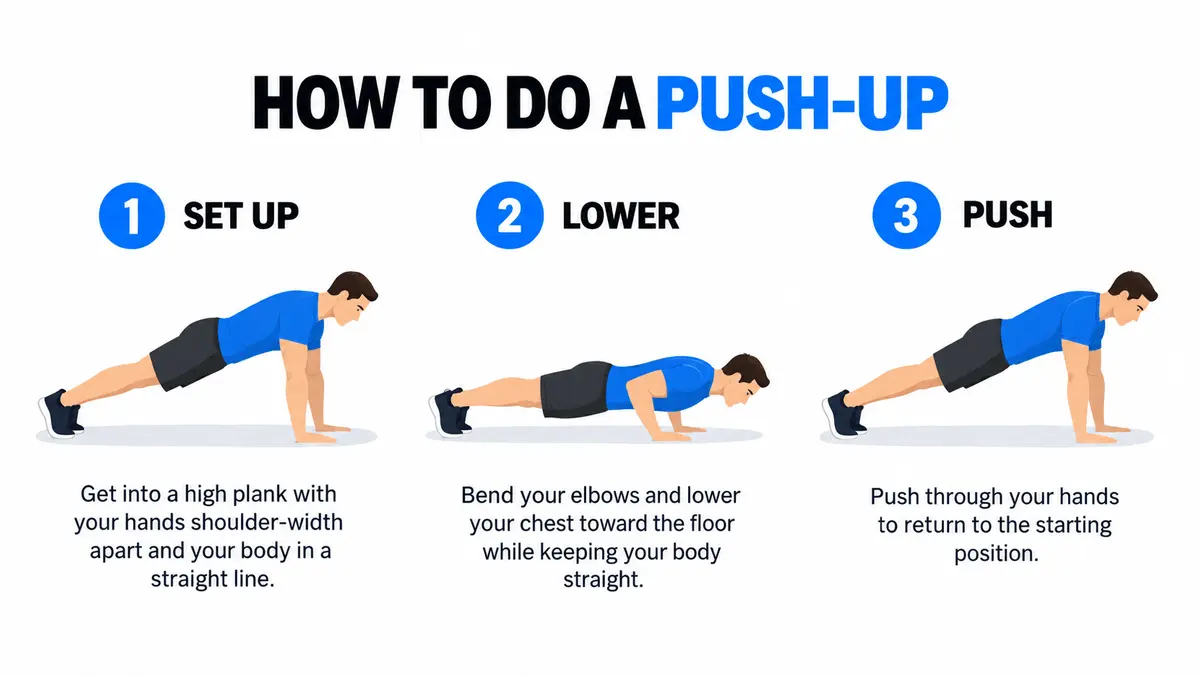
Start in a straight plank position with your hands slightly wider than shoulder width. Lower your chest toward the floor while keeping your body controlled, then press away. Elevate your hands if standard push-ups are too difficult.
3. Feet-Elevated Push-Up
Place your feet on a stable low surface and perform a push-up. The added incline increases the challenge for your upper body. Keep the elevation modest so you can still control your trunk and shoulder position.
4. Dumbbell Squeeze Press
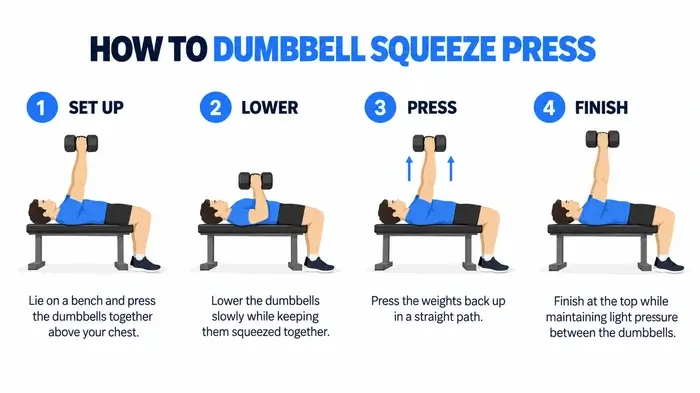
Lie on the floor and hold two dumbbells together over your chest. Maintain light inward pressure between the dumbbells as you lower and press. Use a controlled load; the goal is tension, not forcing the dumbbells together as hard as possible.
5. Single-Arm Dumbbell Floor Press
Use one dumbbell and press with one arm at a time. Keep your torso stable instead of twisting toward the working side. This works well when you own only one adjustable dumbbell or want more unilateral control.
6. Resistance-Band Chest Press
Anchor a resistance band securely behind you and press forward. Bands are useful when space is limited because resistance increases as the band stretches. Check the band and anchor before every set.
7. Dumbbell Floor Fly
Use lighter dumbbells than you would for a press. Lower your arms out to the sides with a soft elbow bend until your upper arms approach the floor, then bring the weights back above your chest.
8. Close-Grip Push-Up
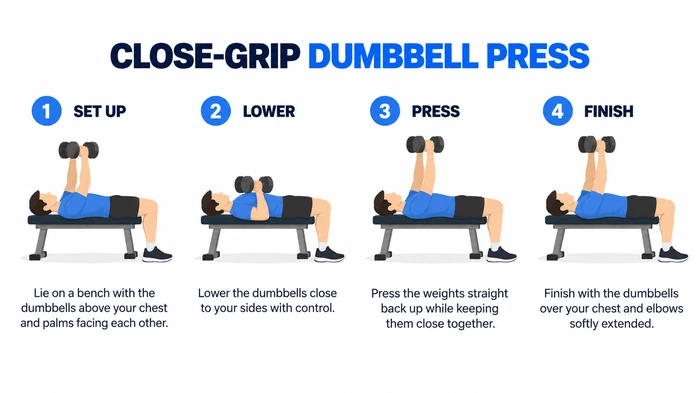
Bring your hands somewhat closer than in a standard push-up and keep your elbows controlled. This variation shifts more work toward the triceps while still training the chest and shoulders.
9. Incline Push-Up
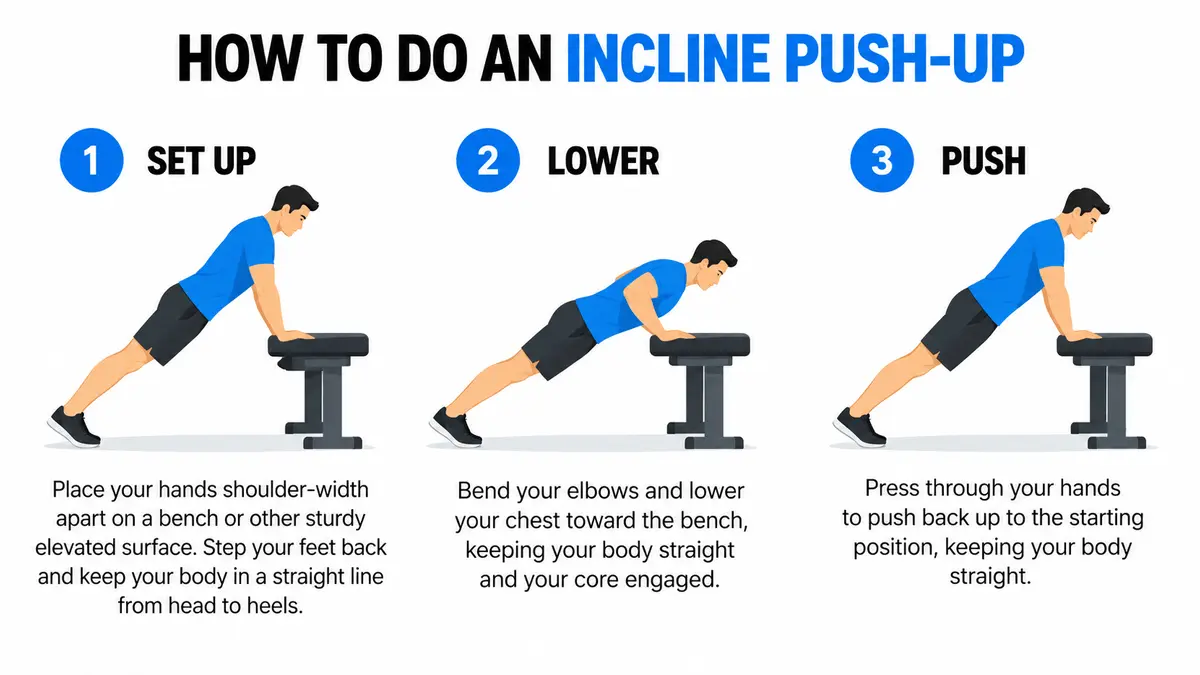
Place your hands on a stable countertop, bench or sturdy table. The higher hand position reduces the amount of bodyweight you have to press, making this a useful beginner progression.
10. Standing Resistance-Band Press
Stand with a securely anchored band behind you and press forward from chest height. This can be useful when you do not want to train on the floor or need a very compact setup.
Which Bench Press Alternative Should You Choose?
If you want the closest home substitute for a barbell bench press, start with the dumbbell floor press. If you have no equipment, use push-ups and progress them with more reps, slower tempo, pauses or feet elevation.
If you are looking specifically for an incline bench press alternative, feet-elevated push-ups can provide a more upper-body-focused pressing angle. For a close-grip bench press alternative, close-grip push-ups or a narrow dumbbell floor press are simple choices.
What About Shoulder Discomfort?
A different exercise can sometimes feel more comfortable because it changes the range of motion or hand position, but pain is not something to train through blindly. Use a pain-free variation, reduce load or range if needed, and stop if discomfort is sharp, persistent or worsening. Ongoing shoulder pain is a good reason to speak with a qualified health professional.
How to Progress Without a Bench
Progression can come from heavier dumbbells, more controlled reps, an extra set or a harder variation. If you use bodyweight, progress from incline push-ups to floor push-ups and then to feet-elevated or loaded variations.
For a broader dumbbell routine, see our chest workout with dumbbells. You can also browse Strength Training and Home Workouts.