Effective Chest Workout with Dumbbells at Home

Building a strong, well-defined chest is a key goal for many fitness lovers. You can get great chest results without needing a gym or expensive gear. This guide will show you how to work out your chest with dumbbells at home.

We’ll focus on key exercises like the dumbbell bench press, dumbbell pullover, dumbbell flys. By using the right form and technique, you’ll hit the chest muscles from different angles. This will help you grow stronger and get a more defined chest, whether you’re new to lifting or have been doing it for years.

Key Takeaways

  • Dumbbell-based chest workouts can be just as effective as gym-based routines.
  • Proper form and technique are crucial for maximizing results and avoiding injury.
  • Incorporating compound and isolation exercises targeting the chest will lead to balanced development.
  • Progressive overload is essential for continued muscle growth and strength gains.
  • A home-based dumbbell chest workout offers convenience and flexibility.

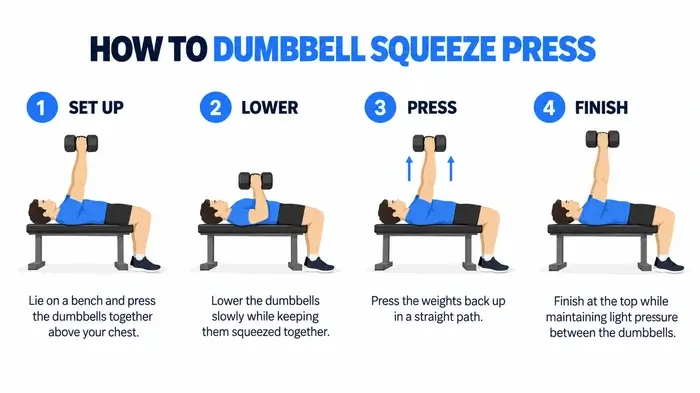
Dumbbell Bench Press: The Cornerstone of Chest Exercises
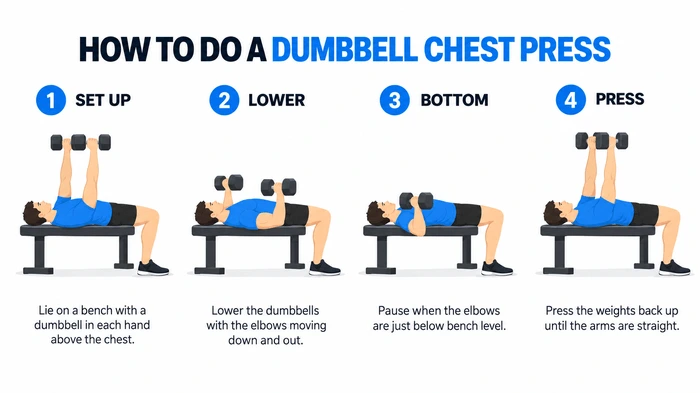
The dumbbell bench press is key for building chest strength. It targets the pectoralis major and minor muscles. This exercise is essential for a balanced upper body.

Proper Form and Technique

Start by lying on a flat bench with a dumbbell in each hand. Engage your core and keep your feet flat on the floor. Slowly lower the weights to your chest, keeping your elbows at a 45-degree angle.

Pause briefly, then press the weights back up. Make sure to extend your arms fully but don’t lock your elbows. This is how you do the dumbbell bench press right.

It’s important to keep your shoulders back and chest up. Avoid arching your back too much. Breathe out as you press the weights up and breathe in as you lower them back down.

Variations and Progressions

The flat dumbbell bench press works the entire chest. Mixing these variations keeps your workouts interesting and effective. It helps your muscles grow stronger.

  • Narrow Grip Bench Press: Bring your hands closer together on the barbell to focus on the inner chest muscles.
  • Wide Grip Bench Press: Spread your grip wider to work the outer chest areas.
  • Partial Reps: Do reps only with the top half of the movement to work the stronger part.
  • Paused Reps: Pause briefly at the bottom of the rep to increase muscle activation and tension.
VariationMuscle FocusBenefits
Narrow Grip Bench PressInner ChestTargets the sternal head of the pectoralis major
Wide Grip Bench PressOuter ChestEmphasizes the clavicular head of the pectoralis major
Partial RepsStronger Range of MotionAllows you to lift heavier weights in the top portion of the movement
Paused RepsTime Under TensionIncreases muscle activation and metabolic stress for hypertrophy

Adding these flat bench press variations and progressions to your chest workout with dumbbells will keep challenging your muscles. It will help you improve your flat bench press skills and grow your chest muscles.

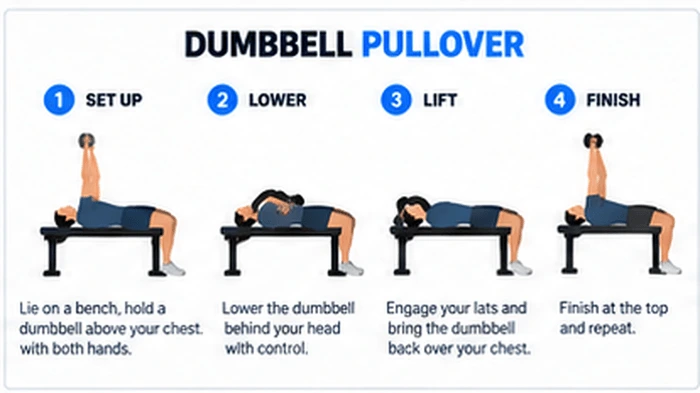
Dumbbell Pullover: A Comprehensive Chest Movement

The dumbbell pullover is a great exercise for the upper body. It works the chest, shoulders, and triceps. Adding it to your workout helps you develop your upper body fully.

This exercise focuses on a special arm movement. You lower a dumbbell behind your head while keeping your elbows still. This targets the chest muscles and the back muscles, giving you a balanced workout.

To do the dumbbell pullover, start by lying on a flat bench with your feet on the floor. Hold a dumbbell with both hands and stretch your arms over your chest. Then, slowly lower the dumbbell behind your head without moving your elbows. Pause, then lift it back up by squeezing your chest muscles.

Adding the dumbbell pullover to your chest and triceps workout has many benefits. It:

  • Works the chest muscles fully
  • Helps widen the upper back
  • Strengthens the triceps and shoulders
  • Improves shoulder flexibility

For the best results, keep your form right and slowly add more weight as you get stronger. This exercise will help you improve your upper body strength and look.

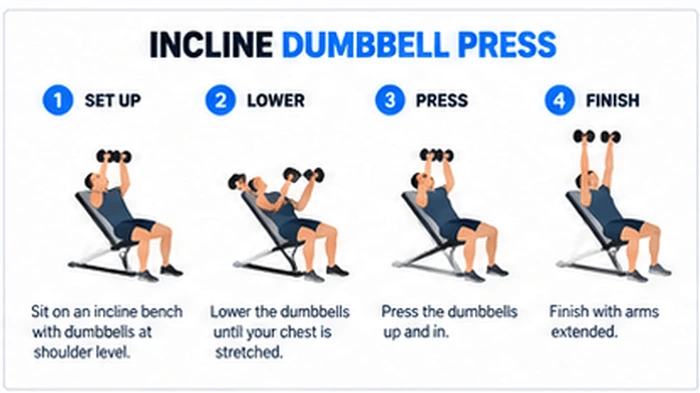
Incline Bench Press: Targeting the Upper Chest

The incline bench press is key for a well-shaped chest. It focuses on the upper chest muscles, like the clavicular head of the pectoralis major. By adjusting the bench, you hit this area hard, making your chest look better balanced and appealing.

Adding the incline bench press to your workout boosts your upper chest. It works the muscles, core, and shoulder joints. This ensures a full workout that helps muscles grow and activate better.

To do the incline bench press with dumbbells, just follow these steps:

  1. Set the bench to a 30-45 degree incline.
  2. Grab a pair of dumbbells and lie back on the bench, keeping your feet firmly planted on the floor.
  3. Extend your arms and hold the dumbbells directly above your chest, with your palms facing inward.
  4. Slowly lower the dumbbells down until they are just below your chest, ensuring your elbows are positioned at a 45-degree angle.
  5. Exhale and press the weights back up to the starting position, contracting your chest muscles as you do so.
  6. Repeat for the desired number of reps, ensuring that you maintain proper form throughout the movement.

Using the incline bench press in your workout helps build a sculpted, even chest. Always focus on proper technique and increase the weight or reps slowly to keep challenging your muscles and seeing progress.

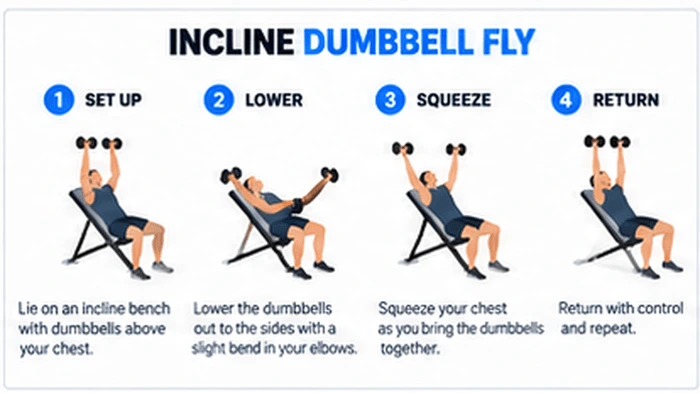
Incline Dumbbell Flys: Sculpting the Upper Chest

The incline dumbbell fly targets the upper chest muscles. Doing this exercise on an incline bench helps focus on the clavicular head of the pectoralis major. It’s important to keep proper form, with elbows slightly bent and focus on chest muscle contraction.

Proper Form and Technique

To do the incline dumbbell fly right, follow these steps:

  1. Set up an incline bench at around a 30-45 degree angle.
  2. Lie back on the bench, holding a dumbbell in each hand with your palms facing inward.
  3. Extend your arms out to the sides, keeping a slight bend in the elbows.
  4. Slowly lower the dumbbells out to the sides, feeling a stretch in your chest muscles.
  5. Pause briefly at the bottom of the movement, then squeeze your chest muscles to bring the dumbbells back to the starting position.
  6. Repeat for the desired number of repetitions, focusing on the contraction of the upper chest.

Experts say the incline angle should match your sternum angle. A steeper incline works better for those with a larger sternum angle, targeting upper chest fibers more effectively.

When doing incline dumbbell flys, keep the movement controlled and avoid swinging the weights. Engage your core, keep your spine neutral, and focus on chest contraction for best results and injury prevention.

Adding incline dumbbell flys to your chest workout with dumbbells targets the upper chest for a balanced, sculpted look. Use the right technique and adjust the incline for your body to effectively work the clavicular head of the pectoralis major.

Standing Low Dumbbell Fly: Engaging the Chest Muscles

The standing low dumbbell fly is a key exercise for a well-defined chest. It targets the pectoralis major and minor in a unique way. This exercise is perfect for your chest workout with dumbbells.

Keep your elbows fixed while lowering the weights towards the floor. This engages the chest muscles differently, making your upper body look balanced and symmetrical.

To do the standing low dumbbell fly, stand with your feet shoulder-width apart. Keep your knees slightly bent and hips slightly bent too. Hold dumbbells at chest height with palms facing each other.

Lower the weights out to the sides, keeping elbows slightly bent. Feel a stretch in your chest, then go back to the start.

  1. Stand with feet shoulder-width apart, knees slightly bent, and a slight hip hinge.
  2. Hold a pair of dumbbells at chest height, palms facing each other.
  3. Keeping your elbows fixed, slowly lower the weights out to the sides, maintaining a slight bend in the elbows.
  4. Feel a deep stretch in your chest, then reverse the motion and return to the starting position.

The standing low dumbbell fly is great for your chest workout with dumbbells. It targets the chest muscles uniquely and helps create a symmetrical upper body. Add this exercise to your routine for a stronger, more defined chest.

Upper Body Dumbbell Workout: A Full-Body Approach

Building a strong, muscular upper body isn’t just about chest exercises with dumbbells. You need to work on back and shoulder muscles too. This full-body workout with dumbbells can help you reach your goals and shape a balanced upper body.

Incorporating Back and Shoulder Exercises

This guide focuses on chest exercises like the bench press and dumbbell flys. But, remember, a complete upper body workout should also hit the back and shoulders. Adding exercises like the dumbbell row and overhead press makes your upper body look good and work better.

  • Dumbbell row: This exercise targets the back muscles, especially the latissimus dorsi, and boosts upper body strength.
  • Overhead press: This targets the deltoids, improving shoulder stability and development.

Adding these back and shoulder exercises to your routine makes your upper body strong, good-looking, and less prone to injury.

A full upper body workout with chest, back, and shoulder exercises does more than just make you look good. It also boosts strength, posture.

Progressive Overload for Continuous Growth

To keep making progress and growing muscles, it’s key to use the principle of progressive overload in your dumbbell chest workout. This means slowly adding more weight, doing more reps, or increasing the intensity over time. By always challenging yourself to lift heavier or do more, you keep your muscles growing and avoid hitting a plateau.

Adopting this progressive way in your dumbbell chest routine is crucial for reaching new levels in your chest workout with dumbbells. As you get stronger and more skilled with the dumbbell bench press, start lifting heavier or doing more reps. This keeps your muscles guessing and adapting, pushing your strength and muscle definition to new heights.

Stick with the progressive overload principle, and your dumbbell chest workouts will keep bringing great results. Always celebrate your progress, but don’t stop pushing yourself. Aim to break your limits and elevate your fitness to new heights.

FAQ

What are the key benefits of a dumbbell chest workout?

A dumbbell chest workout has many benefits. It lets you work each side of your body separately. It targets specific chest areas. And, you can do it at home without needing a gym or expensive gear.

How do I properly execute the dumbbell bench press?

o do the dumbbell bench press right, start by lying on a flat bench with a dumbbell in each hand. Keep your feet flat and engage your core. Lower the weights to your chest by bending your elbows.

Then, press the weights back up to the starting position. Squeeze your chest at the top.

What is the dumbbell pullover, and how does it benefit the chest?

The dumbbell pullover targets the chest, shoulders, and triceps at once. You keep your elbows still and lower a dumbbell behind your head. This engages the chest and back muscles for a full upper body workout.

How can I incorporate both compound and isolation exercises for a balanced chest and arm development?

For balanced chest and arm growth, mix compound and isolation exercises. Compound exercises like the dumbbell bench press work many muscles at once. Isolation exercises, such as triceps extensions, focus on specific areas for detailed shaping.

How can I incorporate back and shoulder exercises into my dumbbell chest workout?

Adding back and shoulder exercises to your chest workout is key for overall upper body health. Try exercises like the dumbbell row and overhead press. This approach strengthens your upper body, improves posture, and shapes your muscles more evenly.

What is the difference between the flat and incline bench press, and how do they target the chest differently?

The flat bench press works the whole chest. The incline bench press focuses on the upper chest, especially the clavicular head of the pectoralis major. The incline position targets the upper chest for more focused development.

How can I properly execute the incline dumbbell fly to target the upper chest?

For the incline dumbbell fly, set the bench to an incline and lie down with dumbbells in hand. Lower the weights out to the sides, focusing on the upper chest. Bring the weights back up, squeezing your chest at the top.

What is the purpose of the standing low dumbbell fly, and how does it complement a dumbbell chest workout?

The standing low dumbbell fly challenges the chest muscles differently. It keeps elbows still and lowers the weights towards the floor. This exercise adds variety to your chest routine, helping to balance your upper body.

How can I ensure continuous progress in my dumbbell chest workout?

For ongoing muscle growth, use the principle of progressive overload. Increase the weight, reps, or intensity over time. Keep challenging yourself to lift more, do more reps, or try new exercises to avoid plateaus.