
Discover the power of High-Intensity Interval Training (HIIT) to change your fitness journey. This guide is perfect for those new to exercise or wanting to spice up their routine. It will introduce you to HIIT and show you how to get fit quickly.

HIIT workouts are popular for their quick results. They mix intense exercise with rest periods. This approach helps burn calories, boost metabolism, and improve heart health. As a beginner, you’ll learn to use HIIT to reach your fitness goals, like losing weight, getting stronger, or increasing endurance.
Start this journey and see how HIIT can change your fitness routine. Get ready to sweat, push yourself, and reach a new fitness level. You’ll feel confident, full of energy, and ready for any challenge.
What is HIIT and Why it Works
HIIT stands for High-Intensity Interval Training. It’s a popular fitness method for both experts and beginners. This workout involves short, intense exercises followed by rest periods. It’s great for boosting heart health, increasing metabolism, and burning fat.
Understanding the Science Behind HIIT
HIIT works by pushing your body hard for short times, then letting it recover. This pattern triggers a metabolic response that keeps burning calories even after you stop exercising. During intense parts of the workout, your body uses anaerobic energy, producing lactic acid.
This process helps your body burn more calories and fat, even when you’re not moving. HIIT is better than steady cardio for improving heart health and burning fat. The intense bursts lead to the “afterburn effect,” where your body keeps burning calories after the workout.
Benefits of HIIT Training for Beginners
HIIT is great for beginners because it’s efficient and effective. Workouts are short, lasting 10 to 30 minutes, but they’re more intense than longer cardio sessions. This makes HIIT a smart choice for those with busy schedules.
HIIT also boosts heart health, muscle tone, and overall fitness. It challenges your body during intense intervals, improving your heart function and metabolism. This leads to better calorie burning and is perfect for losing weight and getting fit.
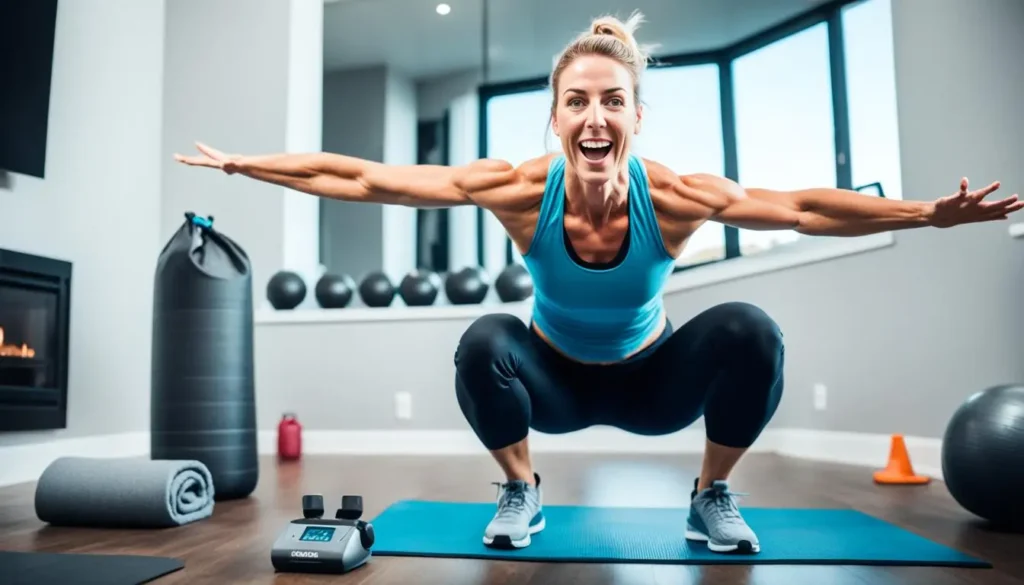
An image of a person doing a high-intensity interval training (HIIT) workout, with their muscles visibly toned and defined. The background should include a stopwatch or timer to represent the short, intense bursts of exercise that make up a HIIT workout. The person should be sweating and breathing heavily, showcasing the cardiovascular benefits of this type of training. Additionally, include a subtle visual element to represent the improved metabolic rate and fat burning potential that comes with regular HIIT workouts.
HIIT Workouts for Beginners
Introducing HIIT workout routines made just for beginners. These workouts are designed to slowly build your fitness level. They help you progress at a pace that feels good.
HIIT workouts switch between high-energy exercise and short rest times. This method is great for burning calories quickly. It’s one of the top cardio exercises that can burn more calories than running.
| Workout Type | Duration | Highlights |
|---|---|---|
| Beginner HIIT Running | 31 minutes | Intervals of 30-second high intensity running with recovery periods |
| Beginner HIIT Cycling | 34 minutes | Intervals of speed focus, resistance focus, and choice of speed or resistance half-Tabatas |
| Beginner HIIT Elliptical | 20 minutes | Intervals of 20-second high intensity pushes with recovery periods |
| Beginner HIIT Bootcamp/Home Gym | 25 minutes | Circuits with different exercises for strength and cardio |
These beginner-friendly HIIT workout routines boost your cardio health and metabolism. They also improve muscular strength and endurance. The workouts last from 10 to 30 minutes and need little equipment, making them perfect for home.
The beginner HIIT workout includes full-body exercises like push-ups, squats, and tricep dips. It also has warm-up and cool-down periods. These help you get the best from your HIIT training and prevent injuries.
Essential HIIT Equipment for Home Workouts
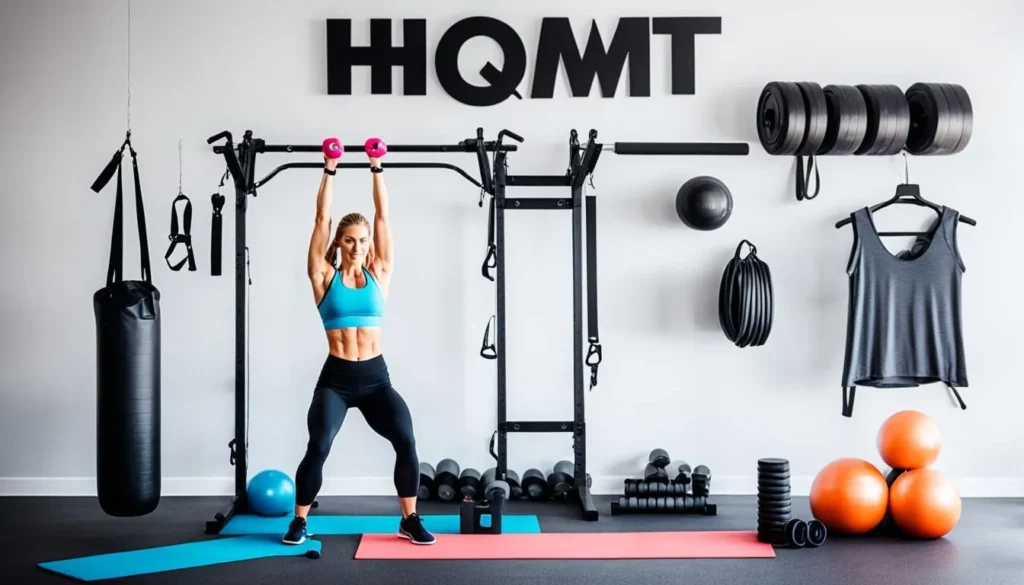
Perfecting your hiit workout routines at home means having the right gear. HIIT workouts work well with little equipment, but some key items can make your training safer and more efficient. Let’s look at the must-have equipment for your home gym.
Creating an Effective HIIT Setup at Home
First, a good exercise mat is key. It gives you a stable and non-slip surface for intense moves, reducing injury risk. Adjustable dumbbells or resistance bands are also a must. They let you change up your workouts and keep them interesting.
A jump rope is great if you have room for it. It boosts your heart rate and enhances coordination and agility. For those who prefer bodyweight exercises, a strong bench or step is useful. It’s perfect for moves like plyometric push-ups and step-ups.
| Essential HIIT Equipment | Benefits |
|---|---|
| Exercise Mat | Provides a comfortable and non-slip surface for high-intensity movements |
| Adjustable Dumbbells or Resistance Bands | Allows for versatile and progressive strength training exercises |
| Jump Rope | Increases heart rate, improves coordination and agility |
| Sturdy Bench or Step | Enables a variety of dynamic bodyweight exercises |
With this basic yet effective HIIT equipment, you can turn your home into a fitness haven. You’ll be ready to tackle your hiit workout routines with ease and confidence.
Proper Warm-Up and Cool-Down Routines
Getting your body ready for a hiit training tips workout is as crucial as the workout itself. A good warm-up and cool-down prevent injuries, boost performance, and make the most of your high-intensity interval training (HIIT) sessions.
Start your warm-up with 5-10 minutes of easy cardio, like walking fast, jogging in place, or jumping jacks. Then, do dynamic stretches for the main muscle groups you’ll use in the workout.
After HIIT, it’s key to cool down and recover. Begin with 5-10 minutes of easy aerobic activity, like a slow jog or bike ride. This helps remove lactic acid and slowly brings your heart rate back down. End with static stretches for the muscles worked hardest during the workout.
| Warm-Up Exercises | Cool-Down Exercises |
|---|---|
| Jumping JacksHigh KneesArm CirclesLeg SwingsLunges with Torso Twists | Slow WalkingCalf StretchesQuadriceps StretchesHamstring StretchesSeated Forward Fold |
Just a few minutes of proper warm-up and cool-down can greatly improve your hiit training tips experience. It prepares your body and helps it recover. This way, you can train harder, lower injury risk, and get better results from your HIIT workouts.
Create an image of a person stretching their legs before a HIIT workout, with emphasis on warming up the body to prevent injury. Depict the importance of starting slow and gradually increasing the intensity of the workout. Show the transition into a cool-down routine after the workout, highlighting the benefits of proper stretching and relaxation to aid in recovery. Use vibrant colors to convey energy and positivity, while also incorporating calming tones for the cool-down portion.
Tips for Staying Motivated and Consistent
Staying motivated and consistent is key to reaching your fitness goals with HIIT. There are practical tips and strategies to help you stay on track with your HIIT workouts. These tips can help you overcome challenges and build a fitness routine that fits your life.
Overcoming Common HIIT Workout Challenges
One big challenge is staying motivated. Research shows that online groups can help by offering support and healthy competition. Having a fitness buddy can also make you more active.
Having a special spot for exercise at home can reduce distractions and boost motivation. There are also many fitness apps available, offering everything from yoga to high-intensity workouts. This variety can make your workouts more fun and interesting.
Another issue is overtraining, which happens if you don’t rest enough. Changing your workouts regularly can keep you motivated and improve your fitness without getting hurt.
Setting small, reachable goals and celebrating your progress can keep you motivated. Remember, even short workouts are good for you. Don’t be too tough on yourself if you don’t feel like exercising sometimes.
HIIT Workout Routines
High-Intensity Interval Training (HIIT) workouts are popular for burning calories quickly. They’re great for both beginners and experienced athletes. You can easily add these workouts to your weekly routine to challenge yourself.
Sample HIIT Workouts for Different Fitness Levels
Beginners should start with HIIT workouts lasting 15 minutes or more. It’s best to do 2 sessions a week to recover. Simple exercises like jumping jacks and squats are great for beginners.
A 15-minute HIIT workout can burn more calories than 40 minutes of steady cardio. This makes it perfect for busy people.
For more advanced workouts, try a 25-minute full-body HIIT routine. It targets your upper, lower body, and core. Experienced exercisers might enjoy an elliptical HIIT workout with 30-second sprints and 1-minute rests.
Or, if you prefer low-impact, try a HIIT walking workout. It involves walking at different speeds to keep things interesting.
Remember to warm up and cool down to protect your body. Adding these HIIT workouts to your routine can greatly improve your fitness.
Combining HIIT with Other Exercises
High-intensity interval training (HIIT) is great for your heart and burning calories. But, mixing it with other exercises makes your fitness plan complete. Adding strength training, low-impact cardio, and flexibility exercises helps you reach your goals. These goals could be losing weight, building muscle, or getting healthier overall.
Combining HIIT with other exercises targets different muscles and systems in your body. HIIT works your heart and cardiovascular system hard. But, adding strength training helps build muscle and improve your body shape. Low-impact cardio like swimming or cycling gives your body a break while keeping you active.
Create an image that shows the difference between HIIT and cardio exercises using contrasting colors and textures. Depict a person performing HIIT exercises, such as sprinting or jumping jacks, with bold, sharp lines and vibrant colors. Show another person doing cardio exercises, like running on a treadmill or cycling, with softer, smoother lines and muted tones. Highlight the intensity and efficiency of HIIT workouts compared to traditional cardio exercises.
A varied fitness routine keeps you motivated and less likely to get bored. It also challenges your body in new ways, helping you stick with your fitness goals. Mixing up your workouts lowers the chance of getting hurt and makes sure you don’t overwork one muscle too much.
When planning your workout mix, think about your fitness level, goals, and what you like. Aim for HIIT workouts 2-3 times a week. Add strength training, low-impact cardio, and flexibility exercises for the rest of your routine. This balanced approach leads to the best results and keeps you healthy and active.
Safety Precautions and Injury Prevention
Starting a hiit training tips journey can be thrilling and life-changing. But, it’s key to focus on safety and prevent injuries. HIIT workouts are efficient, but they need careful attention to form and gradual increases in intensity.
One big worry with hiit training tips is getting overuse injuries, especially in joints and muscles. To avoid this, start with building strength and mobility. Then, slowly up the intensity and time of your HIIT workouts. Always warm up and cool down to get your body ready and help it recover.
Keeping the right form during hiit training tips exercises is also vital. This means having good posture, keeping your core stable, and not straining any one muscle too much. Start with exercises that use your own body weight and get the hang of them before moving on to harder moves or adding weights.
| Common HIIT-Related Injuries | Prevention Strategies |
|---|---|
| Knee pain | Strengthen quadriceps and hamstrings, use proper form during exercises like squats and lunges |
| Ankle sprains | Improve ankle mobility and stability, use appropriate footwear |
| Lower back pain | Engage your core, avoid excessive arching or rounding of the spine |
| Shoulder impingement | Strengthen rotator cuff muscles, maintain proper shoulder positioning during exercises |
By paying attention to these common hiit training tips injury risks and taking steps to prevent them, you can safely add HIIT to your fitness plan. This way, you’ll be on track for success and can keep making progress without getting hurt.
A person performing a HIIT exercise with proper form, while a trainer looks on attentively with a clipboard in hand. The image should convey the importance of proper form and guidance from a professional in order to prevent injuries during high intensity workouts.
Tracking Progress and Celebrating Milestones
Keeping an eye on your hiit benefits and celebrating your wins is key to staying motivated. Setting goals and tracking your progress helps you stay inspired. This way, you can reach your fitness goals.
Begin by setting clear goals, like boosting your heart health, getting stronger, or losing weight. Use a fitness tracker or journal to log your workouts and track your heart rate. Celebrate every milestone, big or small, to show yourself you’re doing great.
Remember, progress isn’t always straight forward, and you might hit bumps along the way. Don’t give up – see these as chances to learn and tweak your strategy. Keep a positive outlook, celebrate your wins, and keep moving forward. With hard work and consistency, you’ll see the hiit benefits you aim for. You’ll feel a deep sense of pride that keeps you going.
FAQ
What is HIIT and how does it work?
HIIT stands for High-Intensity Interval Training. It’s a way to exercise by switching between intense activity and rest. This method boosts your heart health, metabolism, and fat loss.
What are the benefits of HIIT training for beginners?
HIIT is great for beginners. It improves heart health, muscle tone, and fitness level. It also makes your metabolism more efficient. You get results faster than with traditional cardio.
What kind of HIIT workouts are best for beginners?
Beginners can start with bodyweight exercises, simple cardio, or interval training on machines. Start with a level that feels challenging but doable. Then, increase the intensity as you get more comfortable with HIIT.
What equipment do I need to do HIIT workouts at home?
You don’t need much equipment for HIIT at home. You’ll need a yoga mat, dumbbells, a jump rope, and a chair or bench. These items let you create a full HIIT setup at home.
How important are warm-up and cool-down routines for HIIT?
Warm-ups and cool-downs are key for HIIT. They prepare your body for intense work and help it recover afterwards. These routines make your HIIT workouts safer and more effective.
How can I stay motivated and consistent with HIIT?
To stay motivated with HIIT, set goals, track your progress, and find a workout buddy. Mix up your routines to keep it interesting. Celebrate your achievements and be patient with yourself as you build a HIIT habit.
Can I combine HIIT with other exercises?
Yes, you can combine HIIT with other exercises for a full fitness program. For example, add HIIT to strength training or low-impact cardio. This balance improves your heart health, muscle strength, and overall fitness.
What safety precautions should I take when doing HIIT?
Always prioritize safety in HIIT workouts. Start with low intensity and focus on proper form. Stay hydrated and rest enough between sessions. Talk to a doctor if you have health concerns.
How can I track my progress and celebrate my HIIT milestones?
Tracking your progress keeps you motivated and shows your HIIT results. Watch your workout time, reps, and heart rate to see how far you’ve come. Celebrating your achievements keeps you inspired to keep going.